 By Leo Macapagal, PTRP
Hip pain sneaks up on people in their 40s. One day you stand up after a long drive home along Makati Avenue and feel a sharp pinch in your groin. A week later, it is a dull ache in the side of your hip every night when you lie down. A month after that, putting on socks starts feeling harder than it should. This is the pattern I see constantly — hip pain rarely arrives all at once, which is precisely why people wait too long to address it.
The hip is the deepest weight-bearing joint in your body. When it works well, you do not think about it. When it stops working well, every single daily task — walking to the jeepney, climbing stairs at a mall, getting out of bed — becomes a small negotiation. Here is how to understand what is probably going on and what to do about it.
The three most common causes of hip pain after 40
1. Greater trochanteric bursitis
The bursa is a fluid-filled cushion on the outer side of your hip, just under where your wallet pocket sits. It becomes inflamed from overuse, side-sleeping on a firm mattress, or muscle imbalances. The classic presentation: sharp pain on the outside of the hip, worse at night and when lying on that side. Filipino side-sleepers often wake up mid-night with this.
Bursitis is one of the most responsive conditions to physiotherapy. We typically see major improvement within 3 to 5 sessions using manual therapy, targeted glute strengthening, and sleep-position modification.
2. Hip osteoarthritis
Cartilage in the ball-and-socket joint thins over time. The pain is usually deep, felt in the groin or front of the hip (not the outside), and worsens with activity — especially prolonged walking or standing. Stiffness is common in the morning but eases within 30 minutes.
Hip OA progresses more slowly than knee OA in most people, but it eventually limits rotation — you will notice it is hard to put on socks, cross your legs, or get into a car gracefully. Catching it early and building the surrounding muscles prevents most of the functional loss. If yours is mild, our knee and arthritis care program covers hip OA management using the same principles.
3. Femoroacetabular impingement (FAI)
Less familiar to most Filipinos, but common in people who are athletic in their youth — basketball players, dancers, martial artists. The hip socket and ball do not fit quite right, and over time repeated contact causes cartilage damage and sharp "catching" pain in the groin during squatting or deep hip flexion.
FAI is often missed for years because standard X-rays can look normal. If you feel a sharp pinch every time you squat deep or sit in a low chair, and it has been going on for months, this deserves a closer look. Some FAI cases respond beautifully to PT alone; others benefit from orthopedic consultation.
Less common — but worth mentioning
- Hip labral tear. Often accompanies FAI. Deep groin pain with clicking during rotation.
- Sciatic referred pain. Technically a back/nerve problem that feels like hip pain. This is why assessing the back is part of any hip evaluation — see our note on this in when to see a physiotherapist for joint pain.
- Muscle strains (glute medius, adductor, hip flexor). Usually tied to a specific event — a slip, an awkward lift, an ambitious first run after years of inactivity.
Warning signs that warrant urgent attention
Most hip pain is not dangerous. These signs, however, mean "see someone this week, not next month":
- Pain after a fall, especially in someone 50+
- Inability to bear weight on the leg
- Fever or feeling systemically unwell alongside the pain
- Night pain that is severe and unrelieved by position changes
- Leg length difference you can see in the mirror
- Pins-and-needles or numbness spreading down the leg
Tip from our team
A simple home test: stand on one leg and hold the kitchen counter lightly for balance. If your pelvis drops on the non-standing side — the "Trendelenburg sign" — your gluteus medius is weak, and that weakness is likely driving or worsening your hip pain. Most patients fix this with 6 to 8 weeks of targeted strengthening.
Daily adjustments that actually reduce hip pain
Before you book anything, these five changes often bring noticeable relief within two weeks:
Check your sleep position
Side-sleepers: place a pillow between your knees. This keeps the upper leg neutral and offloads the bursa and outer hip. A cheap extra pillow from any SM store does the job. Back-sleepers: a small pillow under the knees reduces the pull of tight hip flexors.
Get up every 40 minutes at the desk
Sitting for hours tightens the front of the hip and shortens the flexor muscles. This is why the first few steps after a long meeting feel stiff. Set a timer. Two minutes of standing and walking per 40 minutes of sitting makes a real difference over months.
Strengthen the glutes
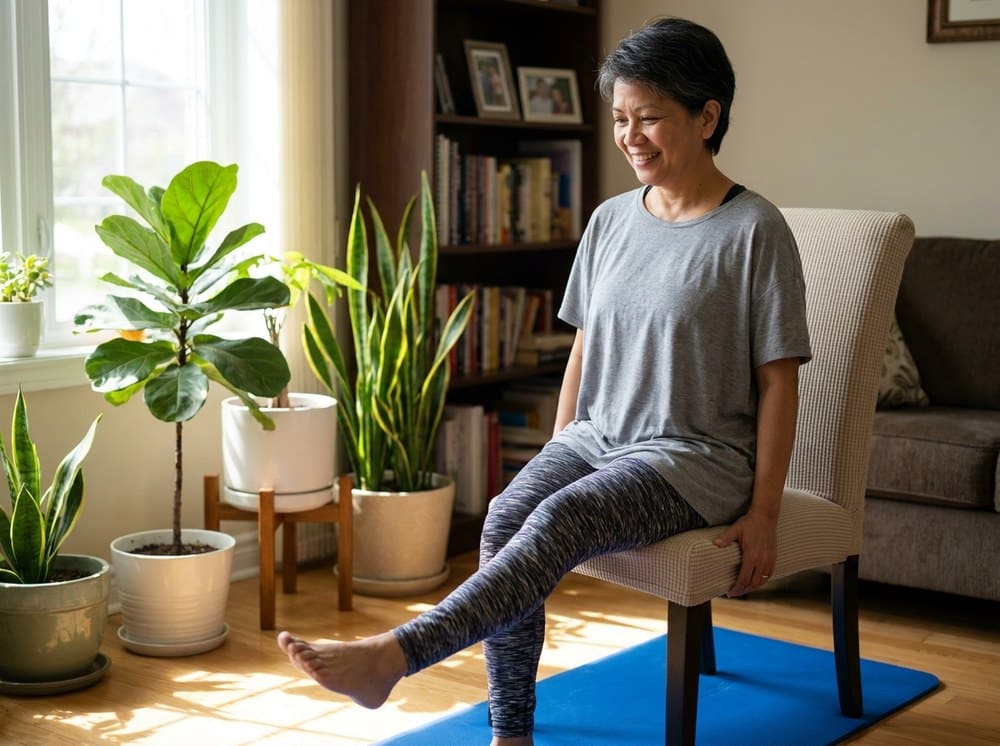
Weak glutes and strong hip flexors is the classic Manila desk-worker profile. The fix is not stretching — it is strengthening. Glute bridges, side-lying leg raises, and clamshells done 3 to 4 times a week rebuild the muscles that should be carrying your hip. Our home knee exercise guide includes a glute bridge progression that works for hip pain too.
Reconsider your mattress
Too firm, and side-sleepers develop bursitis. Too soft, and the hips sink, twisting the spine. Medium-firm with a topper is the sweet spot for most hip-pain patients.
Lose 3 to 5 kilograms if you can
Every kilogram of body weight translates to roughly 3 kg of force through the hip during walking. Small losses create disproportionate relief. This is not about looking different — it is about loading the joint less, every step of the day.
Practical truth: most people with hip pain do not have a "hip problem." They have a "glute that stopped firing and a hip flexor that never rests" problem. The hip joint is just where it hurts.
What physiotherapy looks like for hip pain
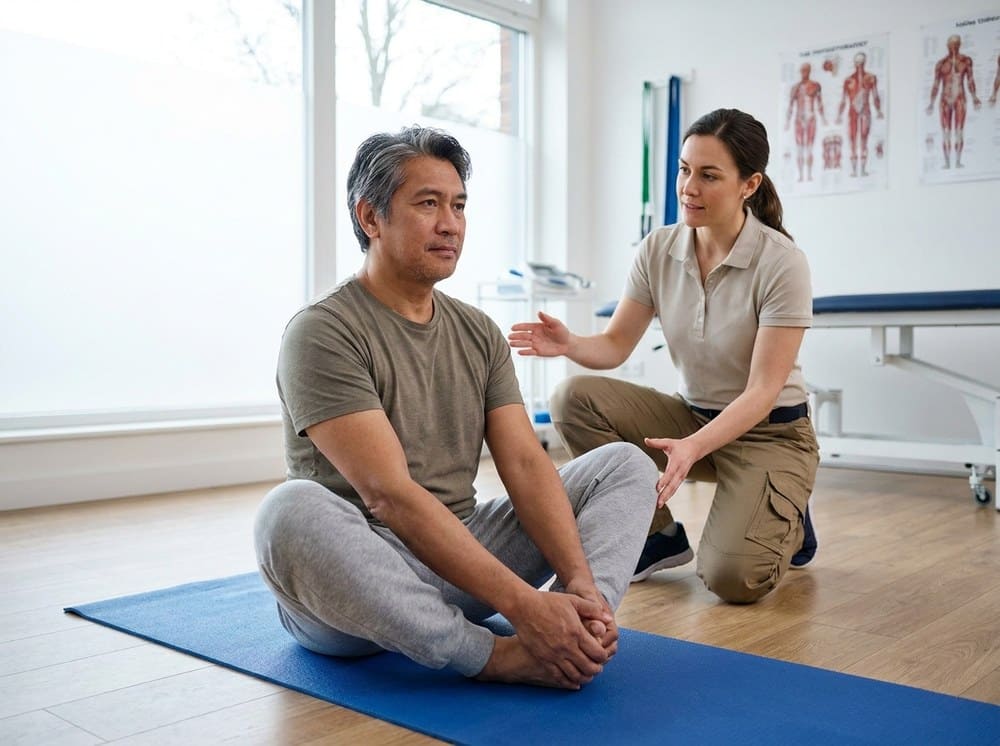
A first hip assessment at our clinic takes about 45 minutes. We test ranges in every direction, check muscle activation patterns, and watch you walk. From that, we build a plan. A typical program for moderate hip pain runs 6 to 10 sessions, combining:
- Manual therapy to release tight hip flexors, TFL, and piriformis
- Joint mobilization to restore normal glide inside the hip socket
- Progressive glute and core strengthening
- Gait retraining — how you walk, not just what you stretch
- A home program designed for Manila condo life
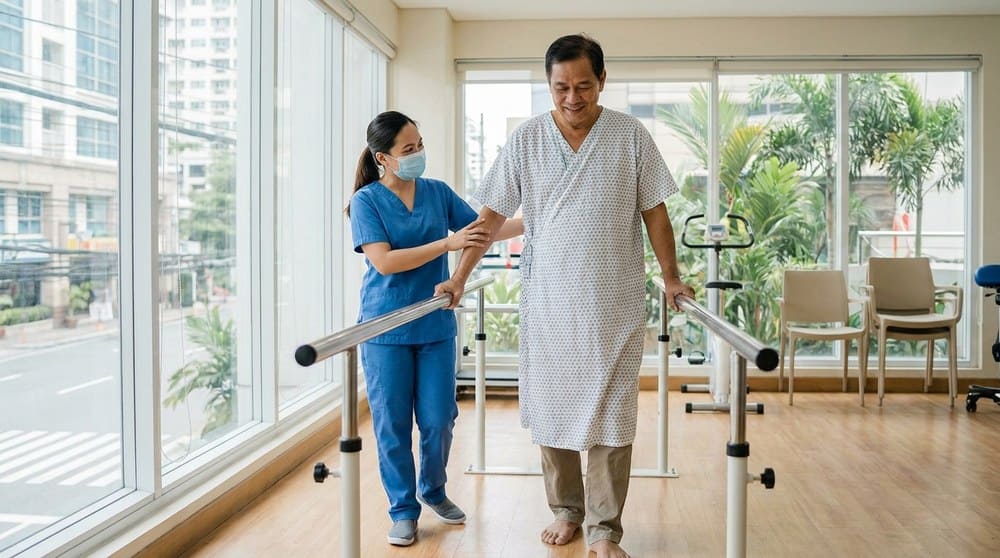
For severe hip OA or FAI cases, we coordinate with orthopedic surgeons at Makati Med or St. Luke's. Where surgery becomes the right path, our post-surgery rehab program takes over afterwards to rebuild strength and confidence.
When hip pain needs imaging
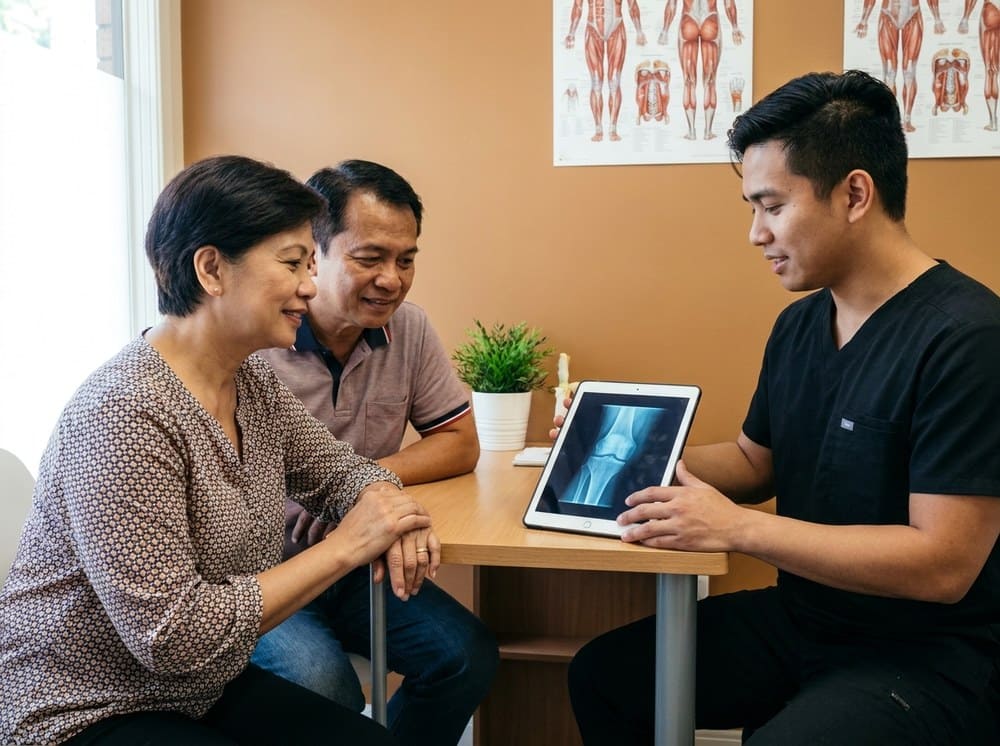
Not every hip pain needs an X-ray. Most early cases do not. But after 4 weeks of consistent physiotherapy with no meaningful improvement, imaging makes sense. X-ray first (covered by most HMOs). MRI only if surgery is being considered or a labral tear is suspected. We will tell you when that line is worth crossing — and when it is not.
Hip pain after 40 is not something you have to "just live with." The sooner you address it, the smaller the fix usually is. Come in for an honest assessment — we will tell you what is driving the pain and whether physiotherapy is the right next step. Usually it is.